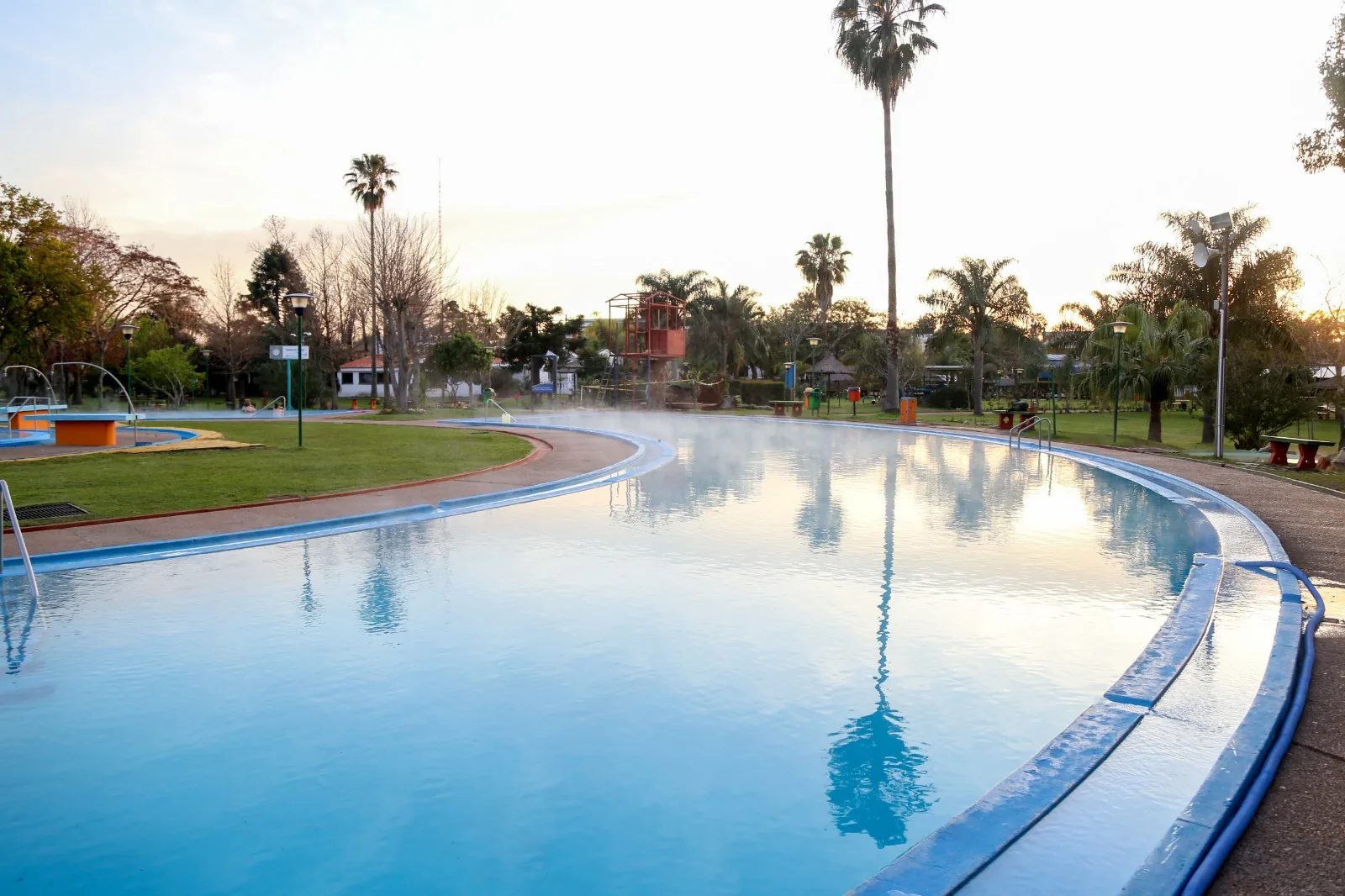
Salto, Uruguay: visit, grow, live and study
Uruguay's second city, on the river that marks the border with Argentina. Water comes out of the ground here at about 40 °C, and the citrus groves and market gardens around it feed the country.
Finding things / everything on the hub, one click away
Search the hub
Most asked Dollar Fuel Taxi What's on Buses Scholarships COMAP Hot springs
Four doors / and everything behind each one
Four ways into Salto
Salto in pictures / six postcards
Salto in six pictures

Riding at sunset in the Salto countrysidephoto: Marcelo Cattani 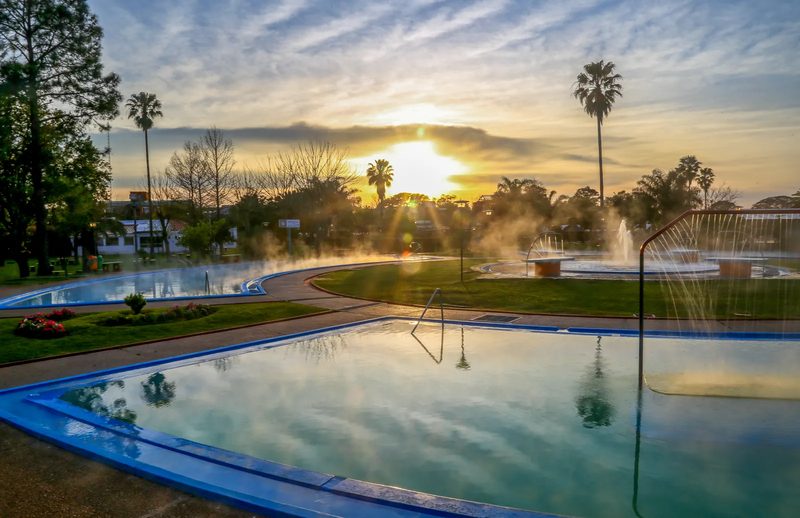
Termas del Daymán, at sunrisephoto: Marcelo Cattani 
Salto Grande lake: paragliding and paddleboardsphoto: Marcelo Cattani 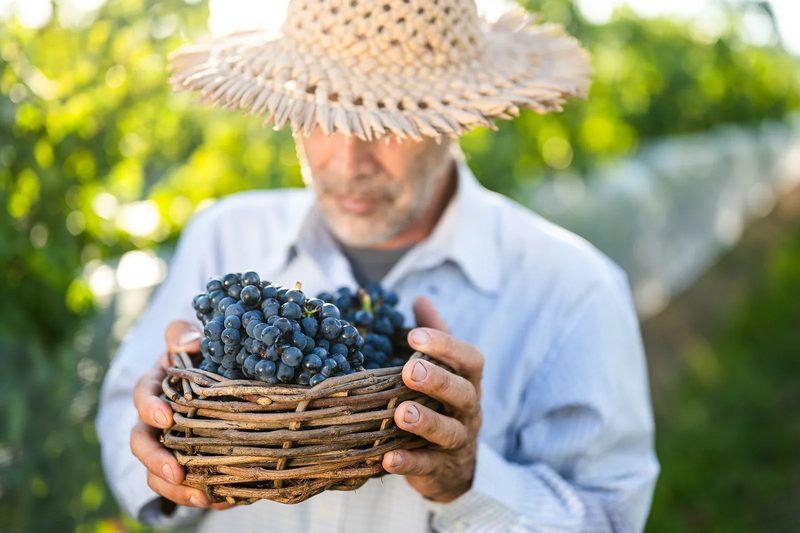
Harvest in a Salto vineyardphoto: Marcelo Cattani 
Teatro Larrañagaphoto: Marcelo Cattani 
Misty dawn on the Uruguay Riverphoto: Marcelo Cattani
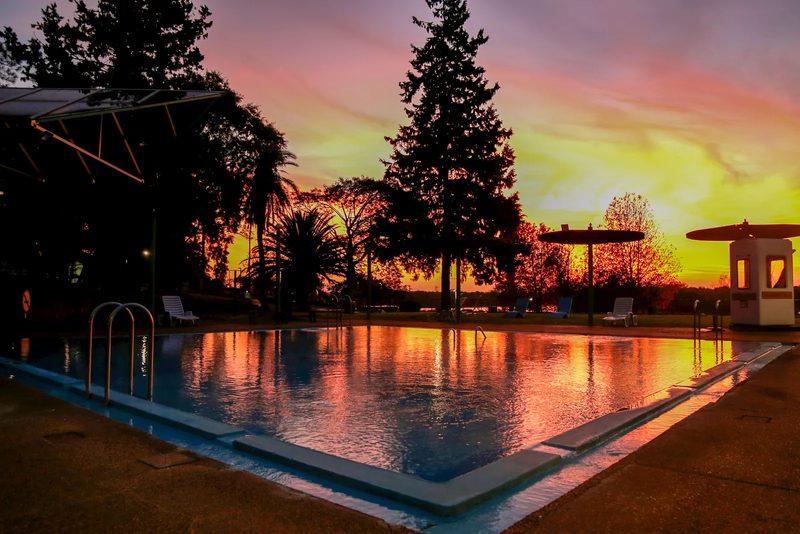
They were drilling for oil and found hot water. Arapey, 1941. Daymán, 1957. Both times.
The crews of Uruguay's Geological Institute were drilling on army land. First came a brown liquid; then water at 41 °C, from 1,300 metres, four hundred thousand litres an hour. The well was going to be plugged. The neighbours across the road, Marcos Sitrín and Fanny Voscoboinik, objected; Sitrín paid for the first pool, which still carries his name. In 1957, at Daymán, another oil well struck the same water: 2,204 metres, 46 °C.

Salto right now · INUMET data
The weather, today and the next few days
The Uruguay river · port of Salto · Salto Grande data
The river, today
See the river page: the history, the great floods and every year since 2019 →
Exchange rates · Salto's exchange houses
What the peso is worth today
Petrol · Salto sits on the border
By card, petrol costs 24% less
- $68.74
- a litre of Súper 95 paid by card, the border price; list price $90.45
- $481
- 100 km on petrol at the border price, at 7 litres per 100 km
- $45
- 100 km in an electric car charged at home overnight, 15 kWh at the off-peak rate
IMESI discount at every station in the city, electronic payment only, up to 50 litres per fill. October 2026 prices. The prices, and what 100 km cost on petrol or electric →
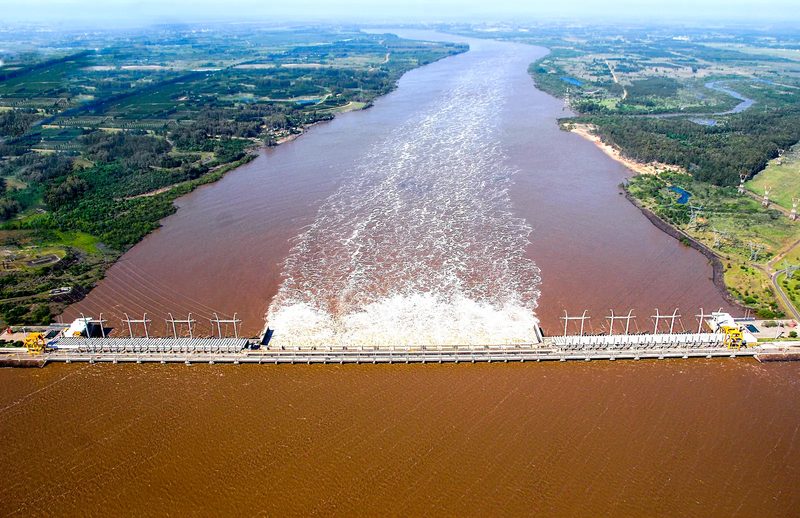
Salto generates · ADME and Salto Grande data
Salto's energy for the country
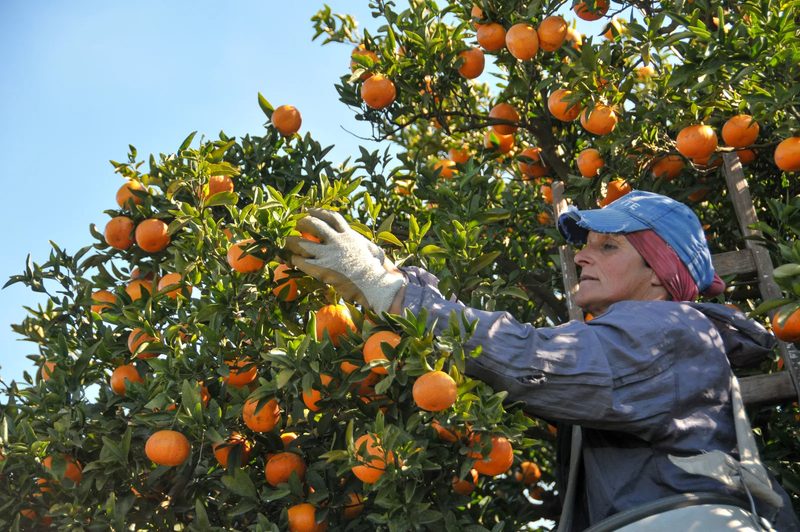
The market garden · Salto's harvest calendar
What the land gives in November
In peak season
- Tomato
- Sweet pepper
- Aubergine
- Courgette
- Early onion
Coming in, going out or from storage
- Orange
- Lemon
- Strawberry
- Blueberry
- Watermelon
- Melon
With November's harvest: salsa criolla, fresh tomato tuco, tomatoes stuffed with tuna, peppers on the parrilla, stuffed zapallitos, zapallito tortilla, pickled aubergines (escabeche), aubergine milanesas · Seasonal recipe book →
Since 2026 Salto's fruit and vegetables have a wholesale market of their own: the Central Hortícola del Norte · What it is and how it works →
Approximate ranges, from the Observatorio Granjero (MGAP–UAM) bulletins and the Salto government's surveys; the moon after Meeus, in Uruguayan time. The full calendar, month by month →
Coming days / open agenda
What's on in Salto
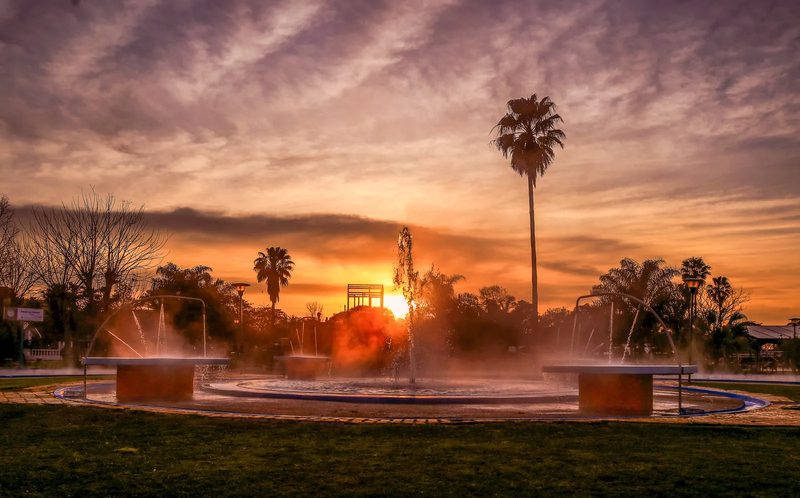
The bottom of the page / the top of the aquifer
Salto in numbers
- 44 °C
- in the hottest pool at Daymán.
- 2,204 m
- deep: the Daymán well, drilled in 1957.
- 125,000
- inhabitants.
- 2nd
- city in Uruguay.
- 15 min
- to Concordia, over the dam.
- 28%
- of the fruit and veg entering Montevideo's wholesale market.
Nobody planned the hot springs. At Arapey in 1941 and at Daymán in 1957, the drills were looking for oil and hit hot water instead.
See you
in Salto.