Grow · Salto, Uruguay · 31°23′S 57°58′W
Grow in Salto. Invest, produce, understand the market.
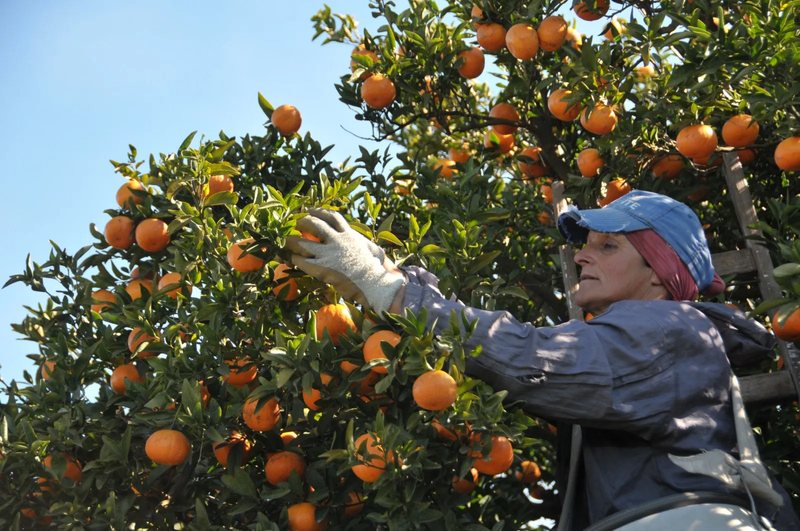
Salto supplies 28% of the fruit and vegetables entering Montevideo's wholesale market, rising to 42% in November, when it is the country's largest supplier (UAM 2025 yearbook); it exports citrus at scale, and since 2026 runs the Central Hortícola del Norte. This is the economic gateway to the department.
Citrus harvest in Salto · photo: Intendencia de Salto
This week at the UAM ·
Price observatoryLoading this week's prices…
01 · Published
Everything so far
- 01
Invest in Salto
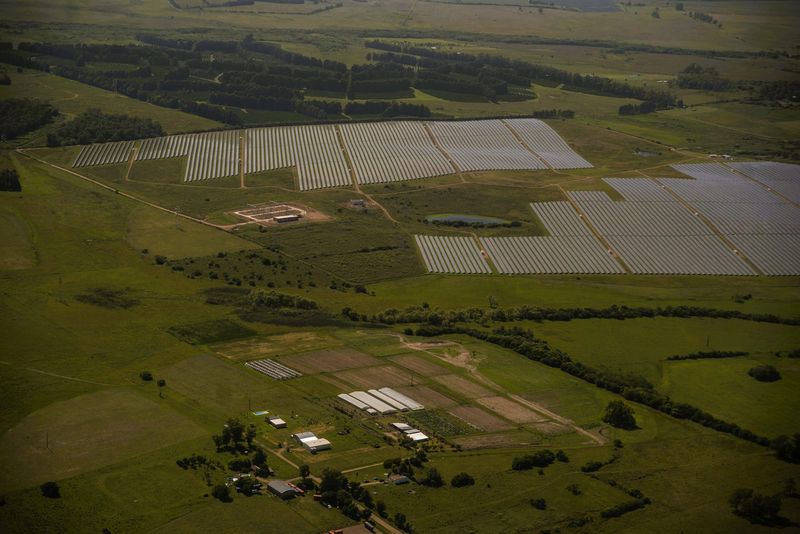
The case for putting capital in the department: utility-scale solar on an existing high-voltage grid, interconnection with Argentina, regenerative tourism built on the hot springs, and the relatively low price of land and the aerospace sector the country began pushing in 2026.
- 02
COMAP, explained from Salto
Law 16,906 and Decree 329/025 in plain terms: what it exempts (income tax, wealth tax, VAT, imports), how a project is scored, Salto's 8 decentralisation points and what they are worth in percentage and in years, and what the OECD has to do with any of it. Sourced and dated.
- 03
The Central Hortícola del Norte
The horticultural sector explained: what the CHN is, Law 20.052, its public-private governance, the 75 wholesale stalls and cold chambers, and why northern Uruguay no longer depends on Montevideo for its supply.
- 04
Seasonal calendar
What Salto grows and in which month: citrus, strawberries, blueberries, the early-season glasshouse vegetables and the field crops, month by month.
- 05
Price observatory
Wholesale reference prices for Salto's produce, monthly since 2011: the full history, year-on-year change and the seasonal pattern of every product, from Uruguay's Observatorio Granjero (MGAP–UAM).
- 06
Market glossary
The vocabulary of Uruguayan farming and its wholesale market explained plainly — primor, zafra, almácigo, consignatario, reference price and 40 more. Enough to read a price bulletin without working in the sector.
- 07
Planting intentions
What Salto's growers planted this half-year and what they plan to plant next: the Salto government's survey, visualised. 114 units, 1,395 hectares, crop by crop.
- 08
Data & methodology
Everything behind the observatory, downloadable as CSV and JSON: UAM prices and volumes, twice-weekly bulletins, Central Hortícola prices. Sources, licence and how every number is computed.
- 09
What the data says
Five crosses you will not find in any bulletin: today's price against ten years in constant pesos, what Salto's window is worth, which crops collapse under oversupply, the Central Hortícola seen from Montevideo, and the kilometres saved.
- 10
Ideas to build in Salto
Twenty-eight things that do not exist yet and make more sense here than anywhere else: a tropical garden under glass heated with hot-spring water, skincare made with Salto's water, strawberry freezing at the peak of the harvest, a Salto–Concordia pass, a cable car across the river, a trail from the port to the quarry, electric taxis, drones for the farm. Each one says what is missing.
02 · Why this section
Why this section
Data on Salto's agrifood economy — prices, seasonality, planting intentions — lives scattered across PDF bulletins, press notes and institutional statements. Nobody presents it in a usable form, whether for a grower, a buyer, or someone looking at the northern littoral from abroad. Grow brings it together in one place, always from cited public sources: the investment case, the sector brief, the calendar, the price observatory, the glossary, the planting intentions, the data and the findings, all in English and Spanish.
03 · Updates
Stay in the loop
One email when something new is published — nothing more.